














From Dodgeballs to Deadlifts
How San Diego High School is changing PE through weightlifting, confidence, and fitness-focused training.
By: Angelina Beltran
San Diego, CA – May 15, 2026
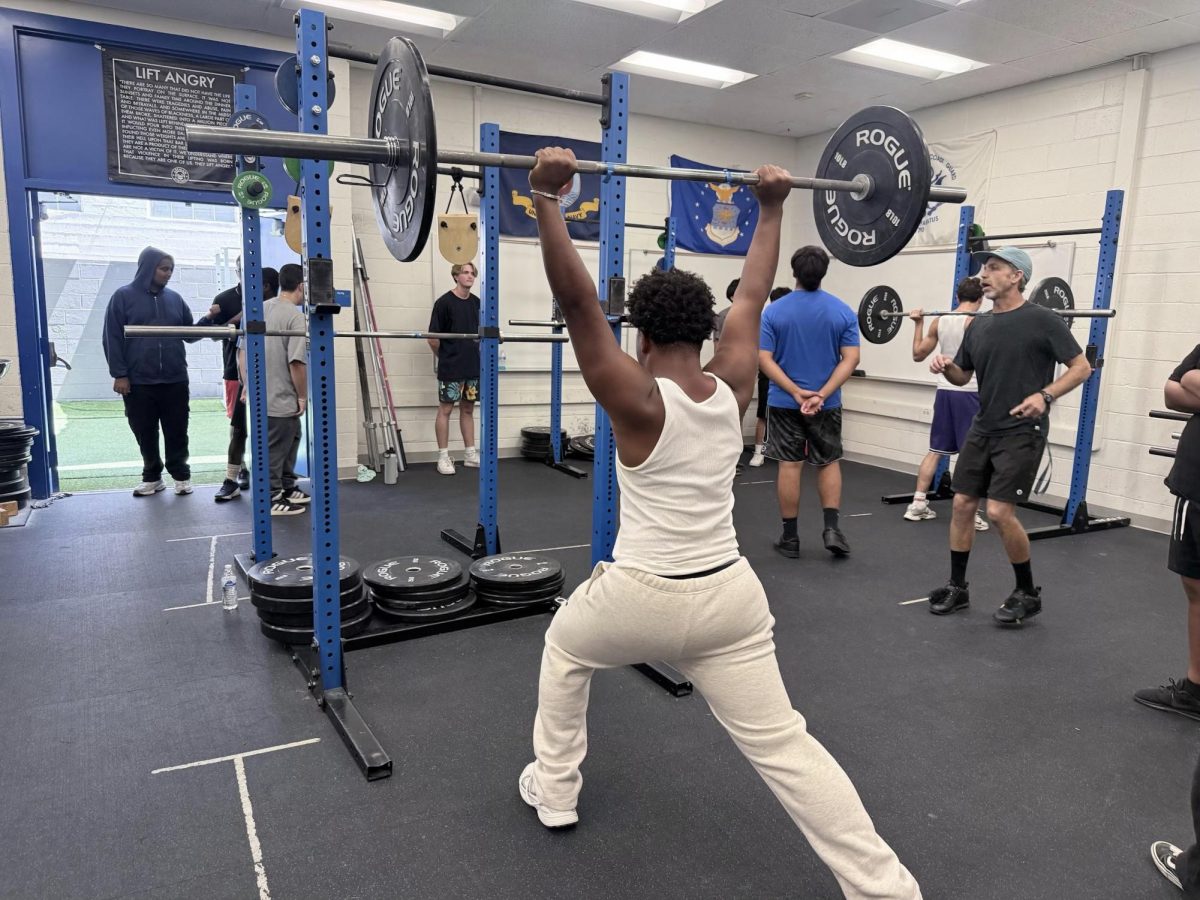
Most students walk into PE expecting the same thing they have done for years, playing random sports, jogging laps, or standing around during games. But at San Diego High School, PE looks completely different. Instead of spending class periods playing dodgeball or soccer, students head straight to the weight room, where they learn how to squat, deadlift and build strength through structured workouts.
What started as a different approach to PE has turned into a program that teachers say is changing students both physically and mentally. Coaches have noticed higher participation, increased confidence, and stronger fitness habits among students.
At most schools, physical education still centers around traditional sports and game-based activities. Students rotate through units like basketball, volleyball, or soccer, often repeating the same kinds of activities they have done since middle school. But at SDHS, PE teachers Coach Sand and Coach Coover decided to build something different, a program centered on strength training, fitness education, and long-term health.
One student, Artizy Hernandez, said she noticed physical changes from the class. “Yeah, I’ve gotten stronger since we started lifting weights,” she said.
Coach Sand explained that the shift comes from how familiar students already are with traditional sports by high school.
“When students are 14 to 16 years old, most of them have already played every sport, probably even yourself,” he said. “By the time you get here, you already know what you like and don’t like.”
Instead of focusing on the game, the program teaches students proper lifting technique and consistent strength training. Coach Coover said the biggest difference is the ability to track real progress.
“What makes it more effective is the fact that we can measure and track students’ progress,” he said. “It’s very difficult to program any sort of progressive overload into a traditional games-based curriculum.”
He explained that in sport-based PE, students may not all get the same level of activity depending on the game.
“If we are playing, for example, a game of soccer, somebody who’s playing forward might do a very different amount of exercise than someone who’s playing defense,” he said.
In the weight room, however, every student is working at their own level and improving over time.
That structure has also changed how some students view PE. Avah Martinez said she prefers traditional PE instead. “I prefer traditional PE because I feel more comfortable just playing sports,” she said.
She added that the transition into weightlifting wasn’t easy at first. “When we first started, I just felt a little uncomfortable because it’s not something I’m used to,” she said, though she noted the environment was still supportive. “Yeah, it was supportive,” she said.
One of the biggest changes teachers noticed after the shift was students’ engagements. Coach Sand said the response was immediate.
“The engagement doubled overnight,” he said.
For many students, PE became less about competition and more about personal goals, getting stronger, gaining confidence, or simply learning how to use the weight room.
That shift is something students notice too. Alany Vazquez said, “Honestly, I think I like this PE better because I know I’m gonna be more fit, and it actually helps me with something instead of just doing something I don’t really enjoy.”
She said she has seen changes in herself beyond just physical fitness. “Yeah, I’ve definitely noticed a change in my body and mindset. I feel like I’m just stronger overall, like physically and mentally,” she said.
Even starting the class wasn’t intimidating for her. “No, I wasn’t really nervous because I was able to do it with my friends, and the teachers were super supportive if we needed help,” she said.
Atziry also said the environment plays a big role in helping students improve. “Yeah, its supportive. People are patient when you’re lifting, and the teachers actually show you how to do everything and explain how it helps you get stronger,” she said.
Coach Sand said that shifts are meaningful for students.
“For some of them, it starts to turn into them having some sort of fitness goals,” he said.
“Whether it’s to look jacked when they look in the mirror, whether it’s to play better in sports, whether it’s to have a little bit more confidence.”
Coach Coover also noticed changes in confidence and participation over time.
“Confidence and attitude specifically,” he said when describing students’ changes. “So, each year, we do a survey, and it does show marked improvement in self-confidence.”
He added the participation has increased as well, especially as students become more comfortable in the weight room environment.
Teachers track progress using fitness tests throughout the year, but they also see daily improvements in real time. “We see them in the weight room all the time,” Coach Sand said.
Beyond physical strength, both coaches emphasize consistency and discipline as key lessons from the class.
“The most obvious lessons are about work ethics and consistency,” Coach Coover said. “So, no matter where you’re starting, if you show up consistently and you put in real work ethic, you’re going to get better.”
Alany agreed that the class teaches discipline. “Yeah, I agree with that because weightlifting is kind of hard and it really forces you to stay focused and build discipline,” she said.
However, Avah had a different view. “Personally, I don’t really think it did,” she said when asked about discipline.
Students also said the class teacher did more than just exercise.
Atziry explained that it can have more parts than traditional PE. “Yeah, it does more than just exercise. It kind of shows you how to stay in shape, and like instead of paying for a gym, you can just use the school gym,” she said.
She also said it helps mentally. “It can also take your mind off things, and if you need help, the teachers are always there,” she said.
The program also states that weightlifting could be for any individual instead of believing it is just for athletes.
“I feel like it is athletes, only athletes couldn’t be more false.” Coach Sand said. “I think it’s for moms, college grads, any sort of time you can put yourself under resistance and learn how to progress in something.”
For both teachers, the goal is long term impact beyond high school PE.
“My physical health determines how long I love, how full of a life I can live,” Coach San said.
Coach Coover described the class as preparation for life, not just school.
“We tell our kids this is not school what we’re teaching; we’re teaching life skills,” he said.
One of the most meaningful parts of the job, according to Coach Sand, is watching students overcome challenges.
“I have been caught like fist pumping in the air and screaming out loud,” he said when describing students hitting lifts they once struggled with. “Watching young people choose something difficult and then overcoming it is really gratifying.”
Because of the results they have seen, both coaches believe more schools should try similar programs.
“I think, honestly, every high school should transition over to strength and conditioning, weightlifting emphasis,” Coach Sand said.
At San Diego High School, the weight room has become more than a place to exercise. It has become a space where students build confidence, discipline, and habits that extend far beyond the classroom.